Health and Safety Policy for Landscaping Barkingside
 This health and safety policy sets out the principles and working practices that support safe, responsible, and consistent landscaping operations. It applies to all work activities carried out by our teams, subcontractors, and anyone else involved in delivering landscaping services. The aim is to protect workers, clients, visitors, members of the public, property, and the environment while ensuring that every task is completed to a high standard. We believe that effective safety management is an essential part of professional landscape maintenance, planting, construction, and seasonal care.
Our approach is based on prevention, planning, and accountability. Before work begins, we assess each job for possible hazards, including manual handling risks, machinery use, slips and trips, adverse weather, dust, noise, and interactions with traffic or third parties. Risk controls are then selected to reduce those hazards as far as is reasonably practicable. This policy applies to all types of landscaping work, including turfing, pruning, soil preparation, hard landscaping, garden clearance, hedge cutting, and general grounds maintenance.
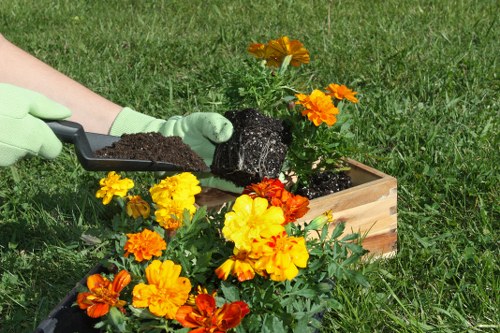 Every worker is expected to take reasonable care of their own health and safety and that of others who may be affected by their actions. Safe behaviour includes following instructions, using equipment properly, reporting defects, and wearing any required personal protective equipment. Managers and supervisors are responsible for ensuring that work is properly planned, that the correct tools are available, and that team members understand the risks associated with each task. This shared responsibility helps maintain a strong safety culture across all landscaping activities.
The company will provide suitable training, supervision, and information to ensure staff are competent to perform their duties safely. Training may cover tool handling, safe lifting, fuel storage, plant and machinery awareness, use of ladders, and the correct operation of powered equipment. Refresher instruction will be given when working methods change or when new equipment is introduced. Where specialist tasks are undertaken, only suitably trained personnel will carry them out. We expect all workers to remain alert, follow instructions carefully, and ask for clarification if a task is unclear.
Equipment and tools must be checked before use and maintained in safe working condition. Any damaged, defective, or unsafe item must be removed from service immediately and reported. Cutting tools, hedge trimmers, mowers, strimmers, blowers, and similar machinery are to be used only by competent individuals and in accordance with manufacturer guidance. Guards, safety devices, and protective covers must never be bypassed or removed. Clean, organised work areas are also important, as clutter and poorly stored materials can create unnecessary hazards during landscaping operations.
 Manual handling is a significant risk in many landscaping tasks, particularly when moving bags of materials, stones, plants, timber, or waste. Wherever possible, loads should be broken down, lifted using suitable aids, or moved by team lifting where appropriate. Workers should plan their route, maintain a stable posture, and avoid twisting while carrying heavy items. If a load appears too difficult to move safely, it should not be attempted without support. Good planning reduces strain and helps prevent avoidable injury across all garden and grounds work.
Weather conditions can change work risks quickly. In hot weather, workers should take suitable breaks, stay hydrated, and protect themselves from sun exposure. In cold, wet, or icy conditions, additional precautions may be needed to reduce slips, falls, and reduced visibility. Tasks may need to be delayed or adjusted if conditions become unsafe. The decision to continue, modify, or stop work will always be guided by risk and professional judgment. A flexible approach helps keep landscape maintenance safe in all seasons.
Public safety is a key part of this policy. Work areas should be clearly identified and controlled where necessary, especially when operating machinery, handling sharp tools, or carrying out tasks near paths, driveways, roads, or occupied premises. Barriers, warning signs, and careful supervision may be used to reduce the chance of accidental entry into active work zones. Materials should be stored securely and waste removed promptly to avoid obstruction. Good site housekeeping supports both safety and productivity in professional landscaping.
Personal protective equipment will be provided or specified where required and may include safety footwear, gloves, eye protection, hearing protection, high-visibility clothing, and respiratory protection for certain tasks. PPE is the final line of defence and must be worn correctly, maintained properly, and replaced when damaged or worn out. It does not replace safe systems of work, but it helps reduce the remaining risk. The right equipment makes a practical difference in day-to-day landscaping tasks.
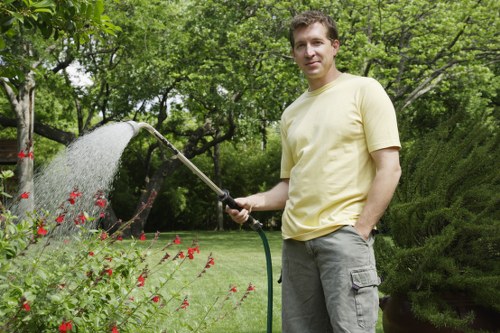 Environmental protection is also part of safe working practice. Fuel, oils, chemicals, and waste materials must be handled responsibly to prevent contamination and unnecessary harm. Spill kits and appropriate storage arrangements should be available where needed, and substances must be used only according to instructions and risk controls. Green waste should be managed efficiently, and materials should be reused or disposed of in a lawful and environmentally considerate way. Safe, tidy working methods support both the site and the surrounding community.
Any accident, near miss, injury, or hazardous occurrence must be reported promptly so that it can be investigated and corrective action taken. This includes incidents involving tools, vehicles, falling objects, slips, trips, or unexpected public access to the work area. Investigations are used to identify causes, improve controls, and prevent recurrence. Lessons learned will be shared with relevant teams so that future landscaping services can be carried out more safely and efficiently. Continuous improvement is central to this policy.
All work must comply with the company’s procedures and with applicable health and safety requirements relevant to the task. This policy will be reviewed regularly to ensure that it remains current, effective, and suitable for the nature of our operations. Changes in equipment, methods, staffing, or risk levels may require updates to procedures or additional training. By following this policy, everyone contributes to a safer, more reliable, and more professional approach to landscaping work.
 Senior management is committed to providing the resources needed to implement this policy, including training, supervision, equipment maintenance, and safe working arrangements. Managers will monitor compliance, encourage reporting, and support a culture where safety concerns can be raised without hesitation. Workers are encouraged to take pride in working carefully and responsibly, recognising that safe practice benefits everyone involved. In this way, landscaping Barkingside services can be delivered with consistency, care, and control.